
This content is created by Misyondent Oral and Dental Health Clinic's team of expert dentists. reviewed by the clinical team and validated. It is based on current clinical literature and applied dental practice.


Our patient, Buse K., came to our clinic hoping to achieve a more even, aesthetic, and harmonious appearance of her upper front teeth when she smiles. During the initial evaluation, it was determined that our patient required a more balanced treatment plan, particularly in the upper front region, regarding tooth size, gum line, color coordination, and the smile line.
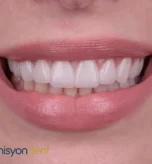
In the initial photograph, color variations in the upper front teeth, irregularities in tooth shape, and areas of the gum line that could be aesthetically improved were noticeable. Therefore, the treatment was planned not solely for the purpose of “changing the color of the teeth,” but by evaluating the gum line, the length-to-width ratio of the teeth, the upper jaw smile line, intrinsic discoloration, and the alignment of the upper and lower jaws together.
Buse K.'s treatment 13.09.2025 started on 01.10.2025 was completed on [date]. During this process, our patient visited our clinic a total of He came five times.
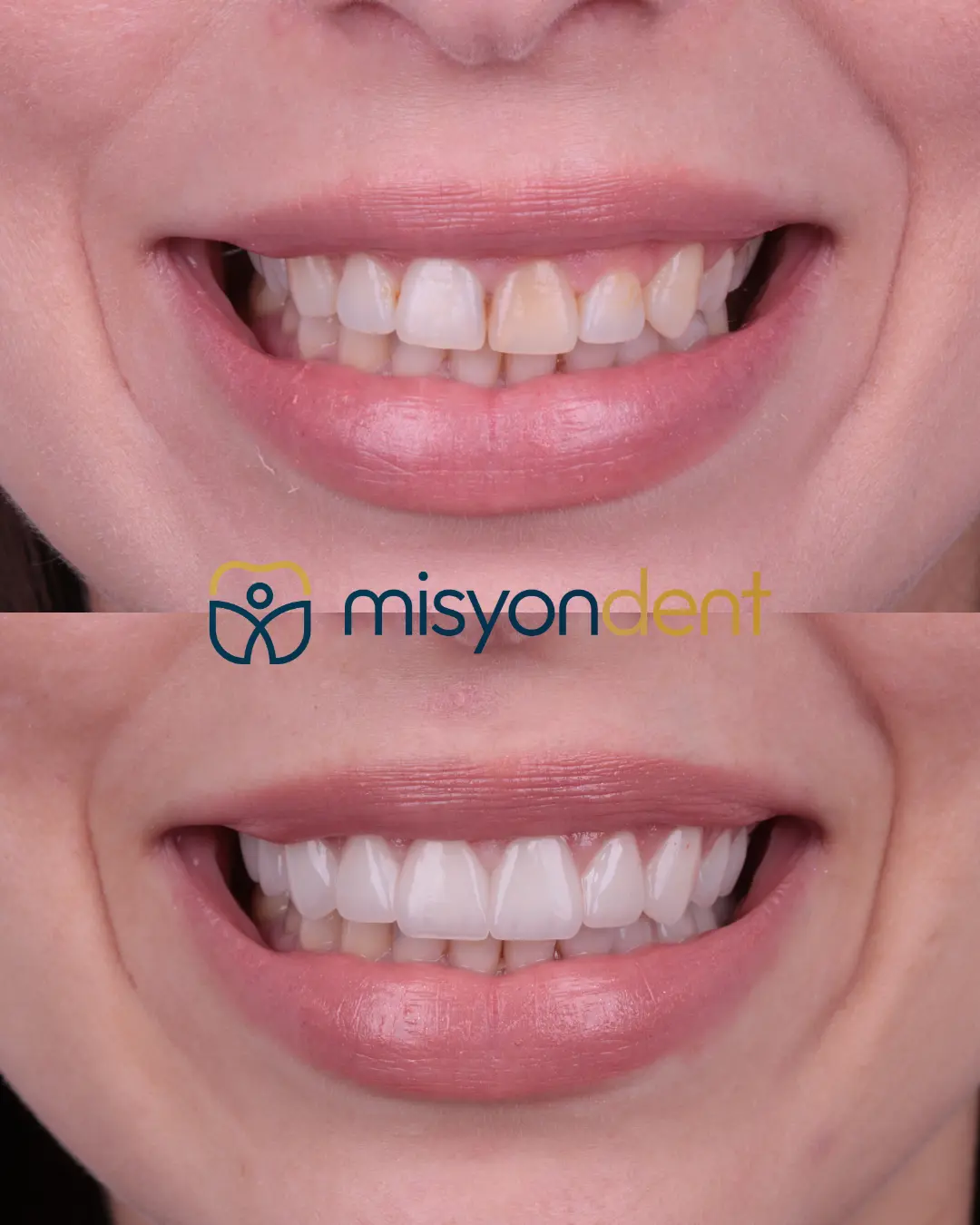
Applied Treatments
The following procedures were performed as part of the treatment plan developed for Buse K.:
- 10 veneers, upper jaw
- 3 zirconia crowns
- 7 gingivectomies
- 1 piece in-channel whitening
- 1 upper jaw retainer
- Detertraj / scaling
According to the treatment plan on the treatment screen, in the upper jaw Laminate veneers on teeth numbers 11, 12, 13, 14, 15, 21, 22, 23, 24, and 25 It was planned. Thus, the teeth visible in the upper smile line were treated as a whole.
Gingivectomy on teeth numbers 11, 12, 13, 14, 21, 22, and 23 was performed. This step was planned to create a more balanced gum line and ensure that the veneers achieve a more aesthetically pleasing relationship with the natural teeth.
In-root canal whitening of tooth number 21 was performed. This procedure is considered particularly in cases where intrinsic discoloration may affect the aesthetic outcome.
In the posterior region of the lower jaw, Zirconia crowns on teeth numbers 35, 36, and 37 It was planned. Although this area is not at the center of aesthetic dentistry, it was included in the treatment plan for the sake of oral function and restorative integrity.
At the end of treatment, for the upper jaw retainer was prepared. The retainer was designed specifically to help maintain the aesthetic alignment of the upper front teeth.
What was our patient's reason for seeking care?
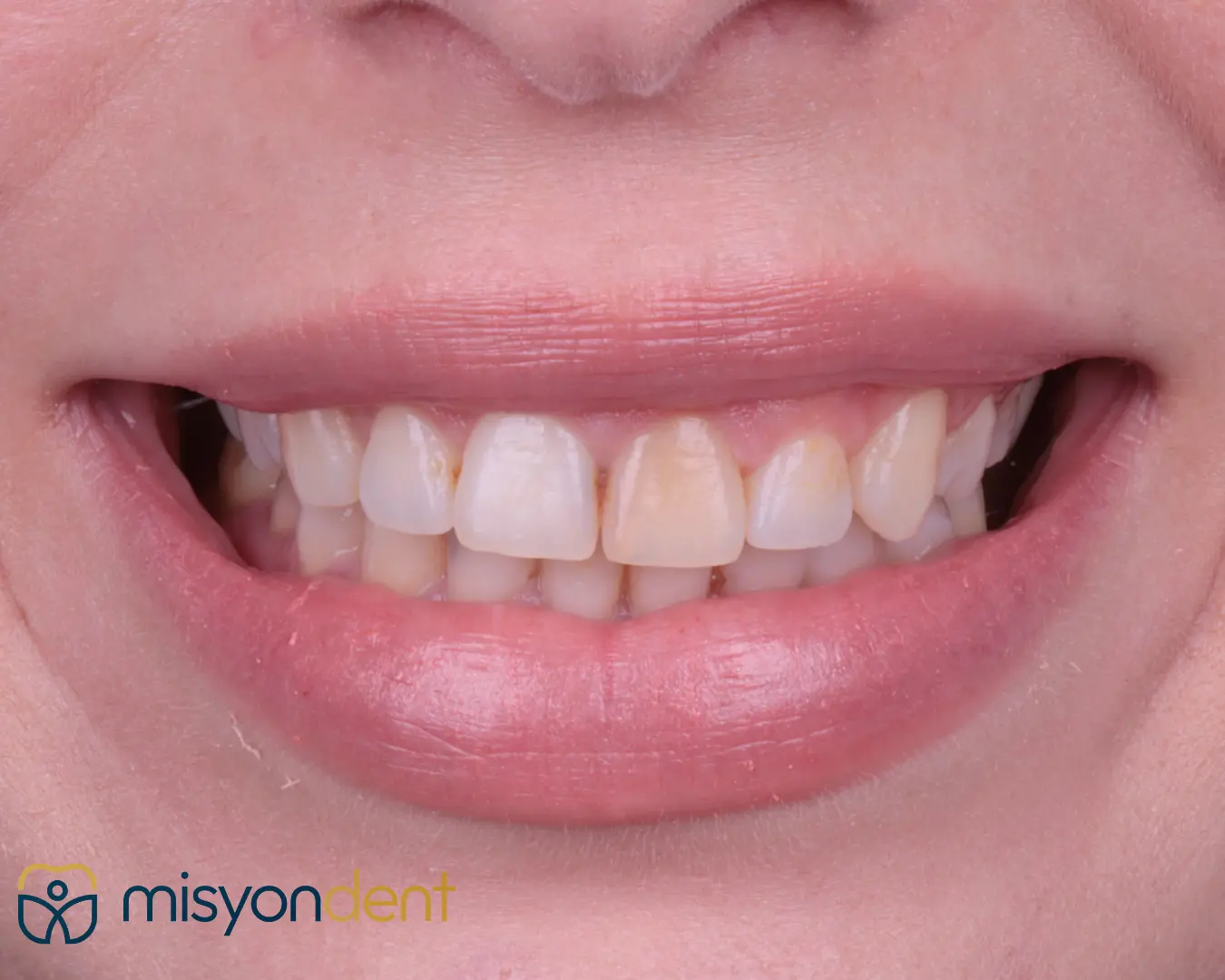
When Buse K. came to our clinic, she wanted her upper front teeth to look more aesthetically pleasing and aligned when she smiled. Our patient’s goal was to make her teeth look brighter, more symmetrical, and cleaner without altering her facial expression.
One of the most important points to note in this case was that the aesthetic issue was not solely due to tooth color. In the upper front region, gum levels, the visible lengths of the teeth, color transitions, and differences in the shape of some teeth all needed to be evaluated together.
For this reason, the treatment plan was based on the following questions:
- Is the visible length of the upper teeth in harmony with the smile line? Should the gum levels be made more even?
- On which teeth do veneers provide a more natural-looking result?
- How can color matching be achieved in a tooth with intrinsic discoloration?
- How are restorative needs in the lower jaw incorporated into the overall treatment plan?
- How can the position of the upper front teeth be maintained after treatment?
Thanks to this approach, Buse K.’s treatment was approached not merely as a cosmetic veneer procedure, but as a more comprehensive smile planning process that included the gum line, color, shape, and protective measures.
What was evaluated in the Kick-off Photo?
The pre-treatment photograph showed that the upper front teeth were clearly visible when smiling, and that minor irregularities in this area affected the overall appearance of the smile. The shade, shape, and relationship of the teeth to the gums were evaluated together.
In particular, the gum line levels that caused some teeth to appear shorter or differently shaped, especially in the upper front region, were noticeable. For this reason, adjusting the gum contour prior to placing laminate veneers has become an important part of the treatment.
In cases like this, simply placing veneers may not be sufficient. If the gum line is not properly aligned, the veneers may not achieve the desired aesthetic balance in the smile line, even if they are technically successful. For this reason, the treatment plan for Buse K. was developed by considering both gingivectomy and veneer placement together.
How Were the X-ray and Treatment Screen Evaluated Together?
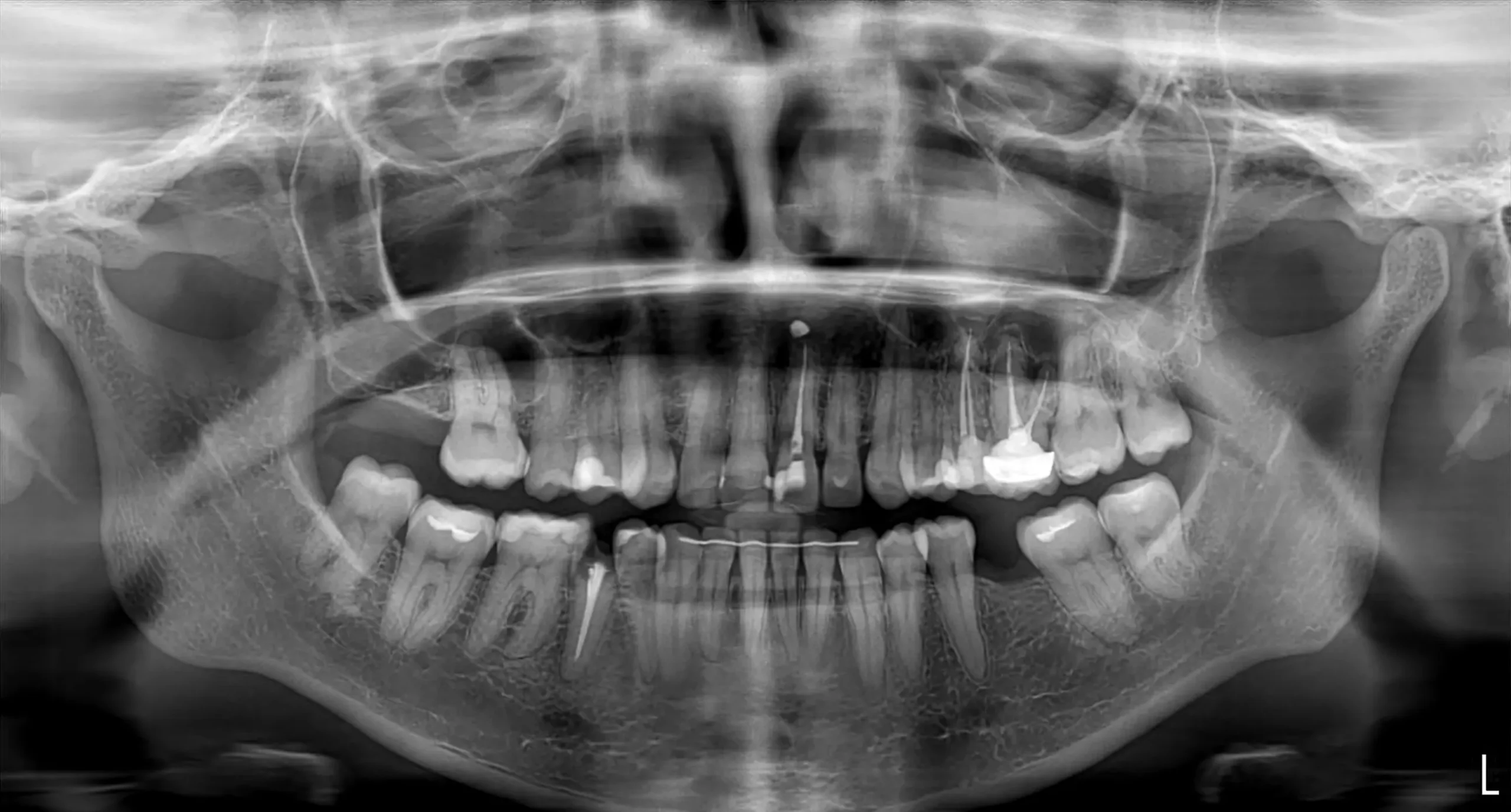
A panoramic X-ray evaluation was performed before starting treatment. The X-ray examined the tooth roots, teeth that had previously undergone root canal treatment, restorations, the overall condition of the upper and lower jaws, and areas that could affect the treatment plan.
On the treatment screen, the teeth in the upper jaw scheduled for laminate veneers, the teeth to undergo gingivectomy, the teeth to undergo in-office whitening, and the teeth in the lower jaw to receive zirconia crowns have been identified separately.
This distinction is important for treatment planning, as not every tooth undergoes the same procedure. While laminates are preferred for the teeth in the upper jaw that are central to the aesthetic appearance, zirconia crowns have been planned for teeth numbers 35, 36, and 37 in the lower left posterior region, which have different restorative needs.
As a result, the treatment is not based on a "one-size-fits-all" approach; instead, it is customized to meet the specific needs of each tooth.
Why Were 10 Laminate Tiles Planned?
In Buse K.’s smile, the anterior region of the upper jaw played a key aesthetic role. For this reason, the 10 teeth visible in the upper jaw during smiling were evaluated as a group.
10 laminate veneers The reason for this plan was to ensure consistency in color, shape, and size along the upper smile line. If treatment had been limited to just a few teeth, there could have been a difference in color or shape between the natural teeth and the new restorations.
In this case, the laminate veneers were planned for the following purposes:
- To create a more balanced appearance in the upper front teeth
- To make the shade of your teeth more uniform
- Planning tooth shapes to better align with the lip line
- Evaluating the teeth visible when smiling as a whole
- To aesthetically enhance the new tooth lengths revealed after gum contouring
- Creating a natural-looking, understated smile line on the upper jaw
For this reason, the laminate veneer procedure was carried out in conjunction with gingivectomy and shade planning.
Why Was Gingivectomy Included in the Treatment?
For Buse K. Gingivectomy on 7 teeth was scheduled. Gingivectomy is a procedure performed to adjust the gum line.
In cosmetic dentistry, it is not only the color and shape of the teeth that matter, but also their relationship with the gums. In some cases, teeth may appear shorter than they actually are, or the gum line may appear uneven from side to side. This can directly affect the aesthetic appearance of the veneers to be placed.
In this case, gingivectomy was performed for the following purposes:
- To even out the gum line in the upper front region
- To bring the visible length of the teeth in line with aesthetic proportions
- Creating a more precise smile line for laminate veneers
- To make the gum-to-tooth relationship appear more symmetrical
- To enhance the natural appearance of the final finishes
Gingivectomy was not merely an additional procedure in this treatment; it was considered one of the fundamental preparatory steps that helped ensure a more balanced appearance of the lamina veneer.
Why Was In-Channel Whitening Performed?
According to the treatment screen In-root canal whitening of tooth number 21 It was scheduled. In-canal bleaching is a procedure typically considered for teeth with intrinsic discoloration or those that have darkened due to a history of root canal treatment.
In some cases, discoloration may stem not from the outer surface but from the tooth’s internal structure. In such cases, traditional whitening procedures or surface-level treatments alone may not be sufficient.
In Buse K.’s treatment plan, in-office bleaching and laminate veneers were scheduled for the upper anterior region to ensure color harmony. This made the shade of the underlying tooth more consistent with the overall color harmony of the final aesthetic restorations.
Why Were 3 Zirconia Crowns Planned?
On the treatment screen Zirconia crowns for teeth numbers 35, 36, and 37 It appears that these teeth are planned. They are located in the lower left posterior region and, although they are not at the forefront of smile aesthetics, they are important for chewing function.
Zirconia crowns may be preferred in cases where durability and restorative support are needed, particularly in the posterior region. In this area, the goal may be more focused on functional support, the replacement of existing restorations, or the preservation of teeth, as opposed to the laminate aesthetics seen in the anterior region.
For this reason, while an aesthetic appearance was planned for Buse K. using laminate veneers on the upper jaw, the goal was to provide functional and restorative support using zirconia crowns in the lower left posterior region.
Why Was the Upper Jaw Retainer Made?
At the end of treatment, for our patient upper jaw retainer It was planned. A retainer is not a procedure routinely performed after veneer or laminate treatment. In this patient’s case, it was planned taking into account their orthodontic history and the tendency for teeth in the upper front region to shift or gap over time.
It is particularly important to maintain the current position of the teeth in patients who have previously undergone orthodontic treatment. Over time, teeth may tend to shift back to their original positions, or gaps may form in the front region. For this reason, a retainer is used to help maintain the achieved tooth position.
For Buse K., the retainer was considered a custom-made supportive device designed to help maintain the position of the teeth in the upper front region, independent of the aesthetic restorations performed.
How many times has our patient visited the clinic, and what was done at each appointment?
Buse K.'s total treatment duration 5 clinic visits was completed. Each of these visits was scheduled to correspond to a different stage of treatment.
Throughout this process, our patient didn’t just see the final result; she had the opportunity to evaluate her new smile step by step during the PMMA try-in and dentin try-in phases before the permanent bonding.
1. Appointment: Tooth Preparation, Digital Impression, Scaling, and Gingivectomy
The basic preparatory steps for the treatment were completed during the first appointment. The teeth were prepared for the laminate veneers on the upper jaw, and a digital impression was then taken.
Tooth preparation is the controlled preparation process performed to ensure that laminate veneers fit properly onto the tooth surface. This procedure is essential for ensuring that the planned restorations look natural and fit seamlessly with the teeth.
Digital impressions, on the other hand, allow for the creation of three-dimensional records of the teeth using intraoral scanners. These records help ensure that veneers are designed more accurately during the laboratory process.
A scaling procedure was performed during the same appointment. Scaling is important for removing tartar, promoting gum health, and making the gum line more visible.
One of the most important steps in this appointment was the gingivectomy. The goal of the gum reshaping performed on seven teeth was to create a more balanced gum line in the upper front region.
2. Appointment: Plastic/PMMA Try-in and In-Office Whitening
During the second appointment, a PMMA try-in was performed. A PMMA try-in involves trying in draft teeth made of plastic material inside the mouth before the final laminate veneers are prepared.
At this stage, the patient’s new tooth dimensions, smile line, lip-to-tooth relationship, and overall tooth shape are evaluated. Thanks to the PMMA try-in, the patient can see a preview of their new smile before the final procedure is performed.
During the same appointment, an in-office whitening procedure was performed on tooth number 21. This procedure was planned to ensure that intrinsic discoloration in the tooth would not affect the final aesthetic result.
During this appointment, the following details were specifically checked:
- Do the new dimensions of the teeth suit the patient's face?
- Is the gum-to-tooth ratio balanced after a gingivectomy?
- Does the upper smile line match the lips?
- How should color matching be maintained for tooth number 21?
- Do we need to make any adjustments to the design before moving on to the final laminate forms?
Appointment 3: Dentin Proofing
During the third appointment, a dentin try-in was performed. At this stage, instead of a plastic model, the actual laminate restorations were evaluated in the mouth prior to polishing and final finishing.
The dentin try-in is one of the most critical checkpoints before the final restoration. This is because, at this stage, the color and shape of the teeth, their fit with the gums, the occlusal relationship, and the patient’s aesthetic expectations are all evaluated together.
During this meeting, the following questions in particular were addressed:
- Does the color of the veneers meet the patient's expectations?
- Are the gum levels aligned with the restoration margins?
- Do the front teeth look natural?
- Is the smile line balanced from left to right?
- Is the patient satisfied with what they see in the mirror?
- Do we need to make any minor adjustments before moving on to the final stage?
Thanks to the dentin try-in, final aesthetic and functional checks were performed before the final restorations were permanently cemented.
4th Appointment: Finishing and Permanent Bonding
By the fourth appointment, the final stage had been reached. At this stage, the color, shape, occlusion, and gingival fit of the laminate and zirconia restorations were evaluated one last time.
After the patient approved the results and all checks were deemed satisfactory, the restorations were permanently cemented in place.
The final stage is not merely the last step in the treatment process. It also serves as the final approval of all the planning, impressions, gingivectomy, PMMA try-in, intra-canal bleaching, and dentin try-in stages.
For Buse K., the lamina veneers on the upper jaw and the zirconia crowns on the lower jaw were also completed at this stage, following a check of their intraoral fit.
5. Appointment: Upper Jaw Retainer
A retainer was fitted on the upper jaw during the fifth appointment. This step was not planned as a routine part of the veneer treatment, but rather to help maintain the current position of our patient’s teeth.
In patients with a history of orthodontic treatment or those at risk of their front teeth drifting apart over time, the use of a retainer can help maintain the position of the teeth. For this reason, a retainer was used in Buse K.’s treatment to help ensure that the alignment of her upper front teeth remains stable in the long term.
What Was the Most Distinctive Aspect of This Treatment Process?
The most distinctive aspect of this treatment process was that the aesthetics of the upper jaw were planned not only with laminate veneers but also by adjusting the gum line and controlling the underlying tooth color.
In Buse K.’s treatment, three different aesthetic layers were evaluated together:
- Gum aesthetics: A gingivectomy was performed to create a more even gum line in the upper front region.
- Tooth color and shape: The upper jaw smile line was corrected using laminate veneers.
- Color scheme: Tooth color matching was improved through in-canal bleaching.
- Functional support: Restorative needs in the lower left posterior region were addressed with zirconia crowns.
- Protection phase: Post-treatment stability was maintained with an upper jaw retainer.
For this reason, treatment should not be viewed simply as “10 laminates were placed”; rather, it should be considered a specialized process that combines upper jaw aesthetics, gum contouring, color correction, and preventive planning.
What kind of change was achieved as a result of the treatment?
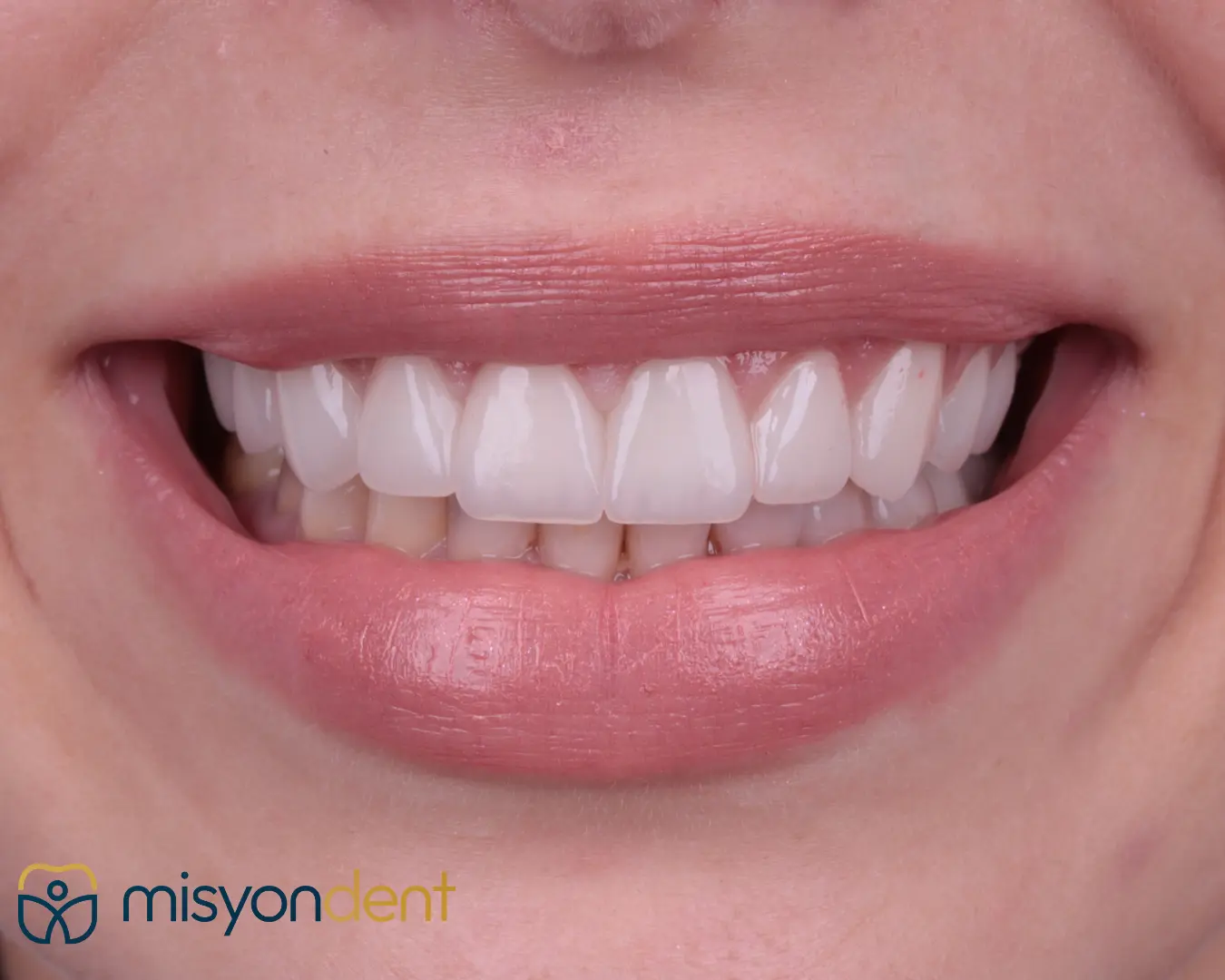
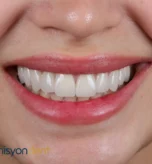
Upon completion of treatment, our patient achieved a more balanced, brighter, and more aesthetically pleasing appearance along the upper gum line. Initially, the smile appeared more disorganized due to uneven gum levels, color variations, and irregularities in shape; by the end of treatment, it had achieved a more harmonious and controlled form.
In the final photograph, it can be seen that the upper front teeth are more harmoniously aligned with the lip line, the color and shape of the teeth are more uniform, and the overall smile appears more aesthetically pleasing.
The goal of this process was to create a smile that harmonizes with our patient’s facial expressions, is free from exaggeration, and appears more balanced and natural.
Who Might This Treatment Be Suitable For?
This treatment plan, developed for Buse K., can serve as a guide for patients who are dissatisfied with the appearance of their upper front teeth but whose issue is not solely due to tooth discoloration.
Similar plans may be considered in the following situations:
- If there is misalignment of the upper front teethIf the gum lines appear uneven
- If the teeth appear shorter or out of proportion than they actually are
- If there is intrinsic discoloration in a single tooth
- If you want to make the smile line of the upper jaw more even
- If there are teeth in the posterior region that require restorative treatment
- If it is necessary to maintain the position of the teeth after treatment
However, the same treatment is not applied to every patient. The need for laminates, zirconia, gingivectomy, in-office whitening, or a retainer is determined based on a clinical examination, X-ray evaluation, and the patient’s expectations.
Frequently Asked Questions
Why is a gingivectomy performed before a laminate veneer procedure?
Does a gingivectomy make teeth look longer?
Can a laminate veneer and a zirconia crown be done in the same treatment?
Why is root canal treatment performed on only one tooth?
What is the purpose of in-tubule bleaching on tooth number 21?
Why are 10 laminates placed on the upper jaw?
Is scaling part of cosmetic treatment?
Why is a PMMA test important after gingivectomy?
Is gum fit checked during a dentin try-in?
Why was a retainer placed in this patient?
Is a retainer wire used for everyone after smile design?
Why are zirconia crowns preferred for back teeth?
Do dental veneers correct the gum line?
How many appointments did this treatment take to complete?
Will this result be the same for everyone?
Short Case Summary
- Patient: Buse K.
- Start date 13.09.2025
- End date: 01.10.2025
- Total clinic visits: 5
- Reason for application: The expectation of a more balanced, more aesthetically pleasing smile in the upper front region that harmonizes with the gum line
- Evaluation: Intraoral photo analysis, panoramic X-ray examination, tooth-based planning via the treatment screen, and assessment of gum level and color matching
- Applied treatments: 10 porcelain veneers, 3 zirconia crowns, 7 gingivectomies, 1 in-office teeth whitening, upper jaw retainer, scaling
- Teeth with veneers: 11, 12, 13, 14, 15, 21, 22, 23, 24, 25
- Teeth that have undergone gingivectomy: 11, 12, 13, 14, 21, 22, 23
- A tooth that has undergone in-office teeth whitening: 21
- Teeth with zirconia crowns: 35, 36, 37
- 1st date: Tooth preparation, digital impressions, scaling, and gingivectomy
- 2nd date: PMMA testing and in-channel whitening
- 3rd date: Dentin rehearsal
- 4th date: Finishing and permanent bonding
- 5th appointment: Upper jaw retainer
- Treatment approach: The upper jaw smile line was corrected with laminate veneers, gum levels were balanced through gingivectomy, color matching was achieved on tooth No. 21 using in-office bleaching, and restorative needs in the lower left posterior region were addressed with zirconia crowns.
- Conclusion: The result is a smile that looks more balanced, brighter, and more even, and is better aligned with the gum line.
This treatment process is planned specifically for the oral and dental structure of our patient. Each patient's treatment needs, the number of procedures to be performed, the number of appointments and the result to be obtained may be different. In order to determine the most suitable treatment options for you, a detailed examination and physician evaluation is required.
Images have been shared for informational purposes with the express consent of our patient. Treatment results may vary from person to person. All treatments are planned individually.
This content, Misyondent Oral and Dental Health Clinic specialized dentists in line with current clinical literature and professional experience. It is intended for general information purposes only and does not constitute medical advice. For individual assessment appointment with our specialist physicians is recommended.
Was this content useful?Your feedback helps us improve our content.
Thanks for your feedback!
Would you like to get expert support on the subject?
Share your feedback with us
What would you like to know more about? Your feedback helps us improve our content.
Thank you, WhatsApp is opening!
Your message has been prepared. Confirm on WhatsApp to send.
Misyondent Dental Clinic
Bahçelievler Mah. Colonel Ibrahim Karaoglanoglu Sok. No:20B, Bahçelievler / Istanbul
Nearby Districts Make an Appointment
Hft-Cum: 09:00-18:00 - Sat-Mon: Closed
5.0
Dt. Deniz Caliskan
Aesthetic Dentist - Misyondent
Expert authorBorn in 1987, Dt. Deniz Çalışkan completed her dental education at Sofia University. Specializing in aesthetic dentistry, Çalışkan offers customized solutions for each patient in zirconium veneers, smile design and minimally invasive treatments.

 Türkçe
  English