
This content is created by Misyondent Oral and Dental Health Clinic's team of expert dentists. reviewed by the clinical team and validated. It is based on current clinical literature and applied dental practice.


Our patient named Adem P. applied to our clinic with the expectation that his teeth would look more regular, more aesthetic and more complete during the smile. In the first evaluation, it was seen that there were some irregularities affecting the smile aesthetics in terms of form, color and alignment of the teeth, especially in the anterior region.
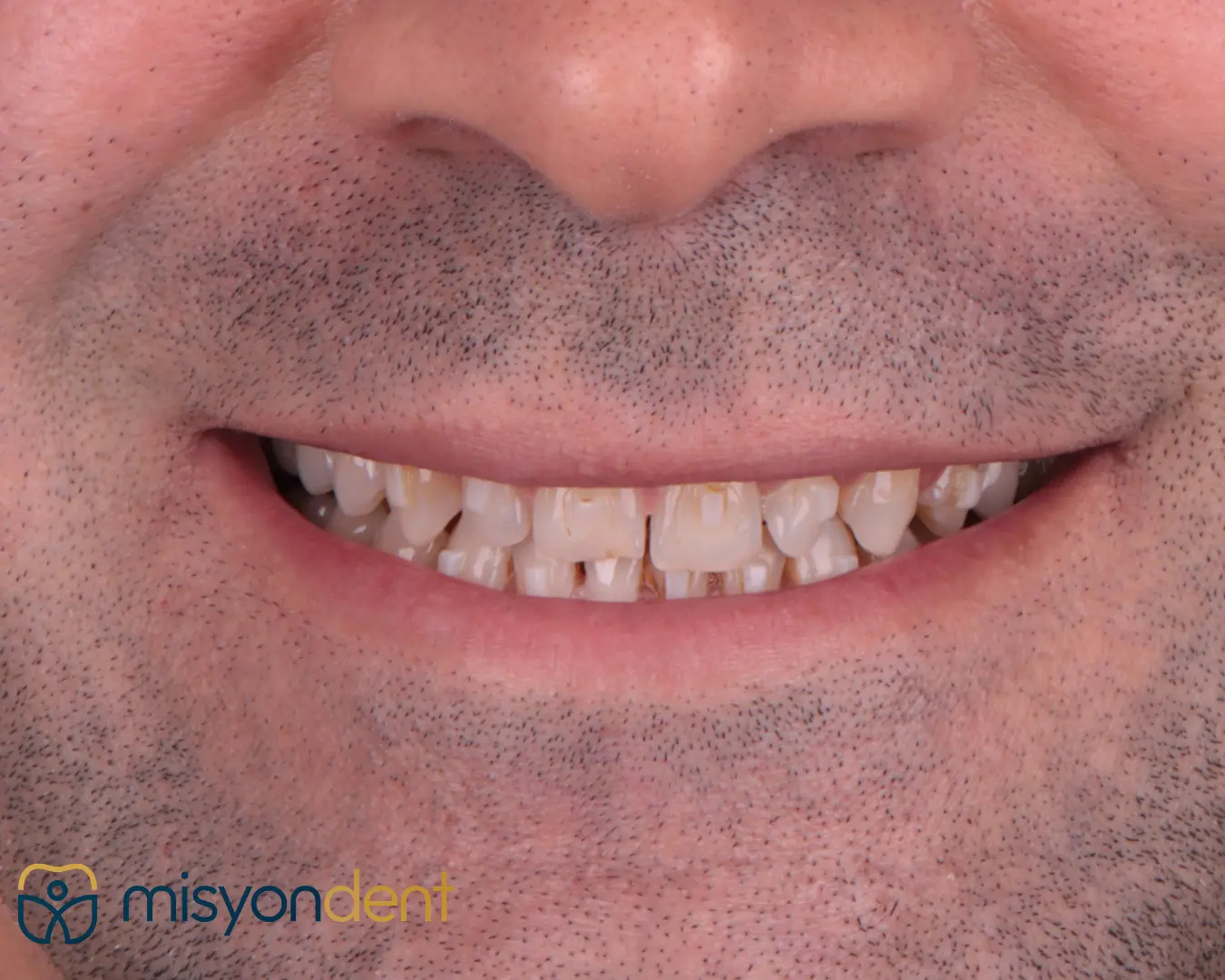
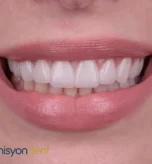
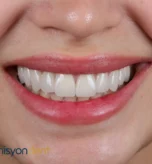
In the initial photograph, differences in the general color of the teeth, form incompatibilities in the anterior teeth, irregular appearances at the edges of the teeth and areas that could be made more balanced in the smile line were noticeable. Rather than an exaggerated and artificial appearance, our patient's expectation was to achieve a cleaner, more organized smile that was perceived more natural and in harmony with her facial expression.
Therefore, the treatment plan did not only focus on changing the color of the teeth. The relationship of the teeth to the lips, the amount of teeth visible during the smile, the size of the front teeth, the existing tooth structure and the panoramic x-ray evaluation were taken together. 20 pieces of lamina veneer planned.
Treatment process 21.07.2025 started on 28.07.2025 was completed on During this period, our patient was admitted to our clinic Came 4 times.
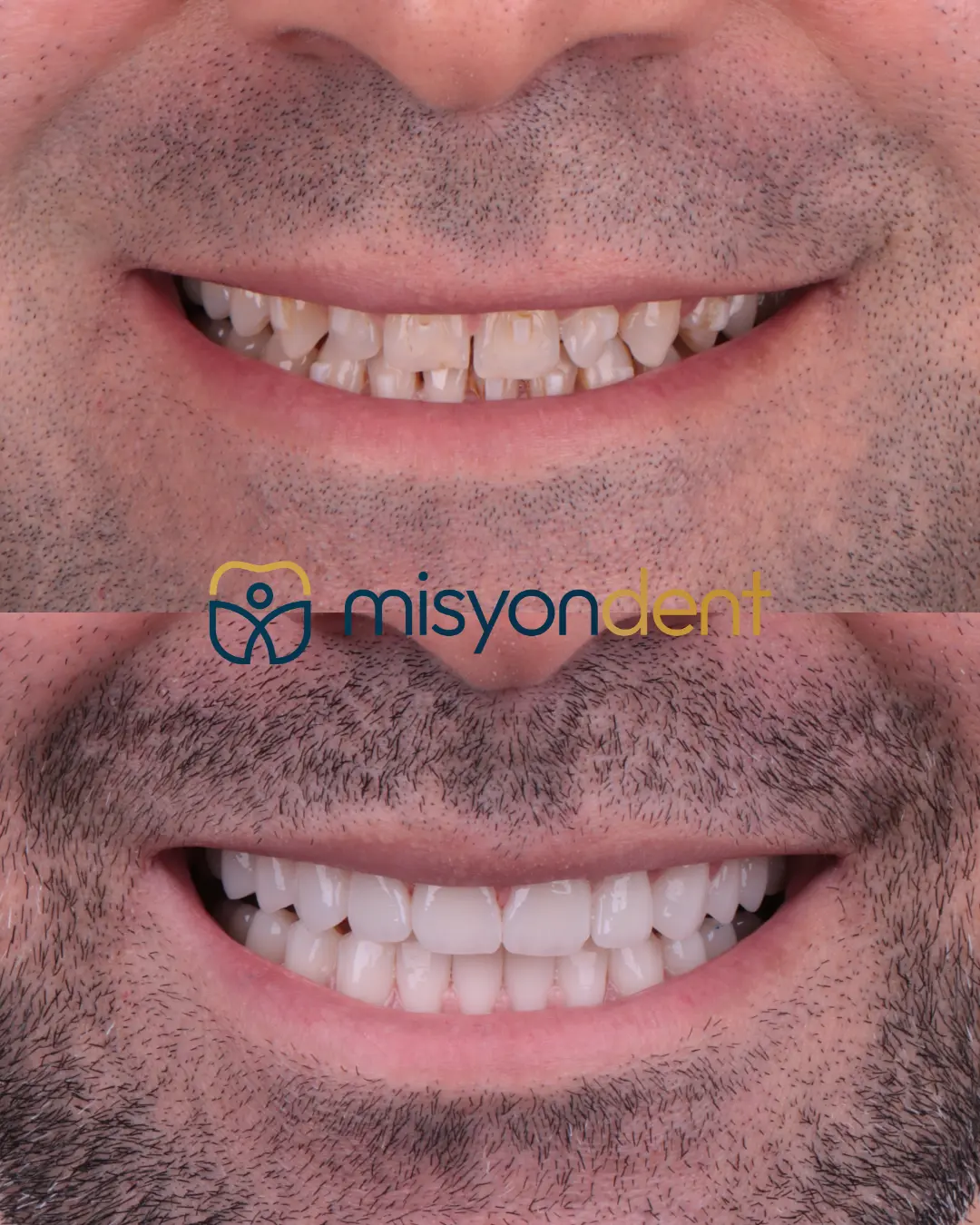
Treatment Applied
The following procedure was applied in the treatment plan prepared for Adem P:
20 pieces of lamina veneer
Lamina veneers are one of the aesthetic restorations that can be preferred to regulate the color, form, size and surface irregularities on the front surface of the teeth, especially in smile aesthetics. The aim of this treatment is not to make the teeth look different and artificial; it is to achieve a more balanced appearance that is compatible with the patient's facial structure, lip movements and smile character.
The main reason for planning 20 laminae for Adem P. was that the teeth visible during the smile should be evaluated as a whole, not just individually. The upper and lower smile line was planned together, as only a few teeth would be treated, which would cause incompatibility in color and form transitions.
What was our patient's initial expectation?
When our patient came to our clinic, she wanted her teeth to look more organized during the smile. Especially in the anterior region, the dimensions, edge forms and color transitions of the teeth could be made more aesthetic.
In such cases, the patient often applies with the thought "My teeth are not too bad, but can my smile be smoother?". For Adem P., the aim was to make the smile more refined, cleaner and more harmonious rather than a major change.
The following expectations were taken into account when developing the treatment plan:
- More regular appearance of the teeth
- Smile line becomes more balanced
- Brighter but natural perception of tooth color
- Elimination of form irregularities in the front teeth
- Achieving a more aesthetic smile without changing facial expression
- After the patient is satisfied with the final result, proceeding to the permanent bonding stage
What was evaluated in the Kick-off Photo?
The visibility of the anterior teeth, the lip line, the proportions of the teeth to each other and the overall symmetry of the smile were evaluated in the pre-treatment photograph. There were irregularities in the edge forms of some teeth, differences in color transitions and areas in the smile line that could be aesthetically edited.
At this stage, only the approach of "let the teeth be whiter" would not be correct. Because in addition to the color in smile aesthetics, the length, width, surface structure, relationship with the lips and the ratio of the teeth to each other also directly affect the result.
For this reason, the form and position of the teeth in the smile were evaluated as well as the color of the teeth while making the lamina veneer plan for Adem P.
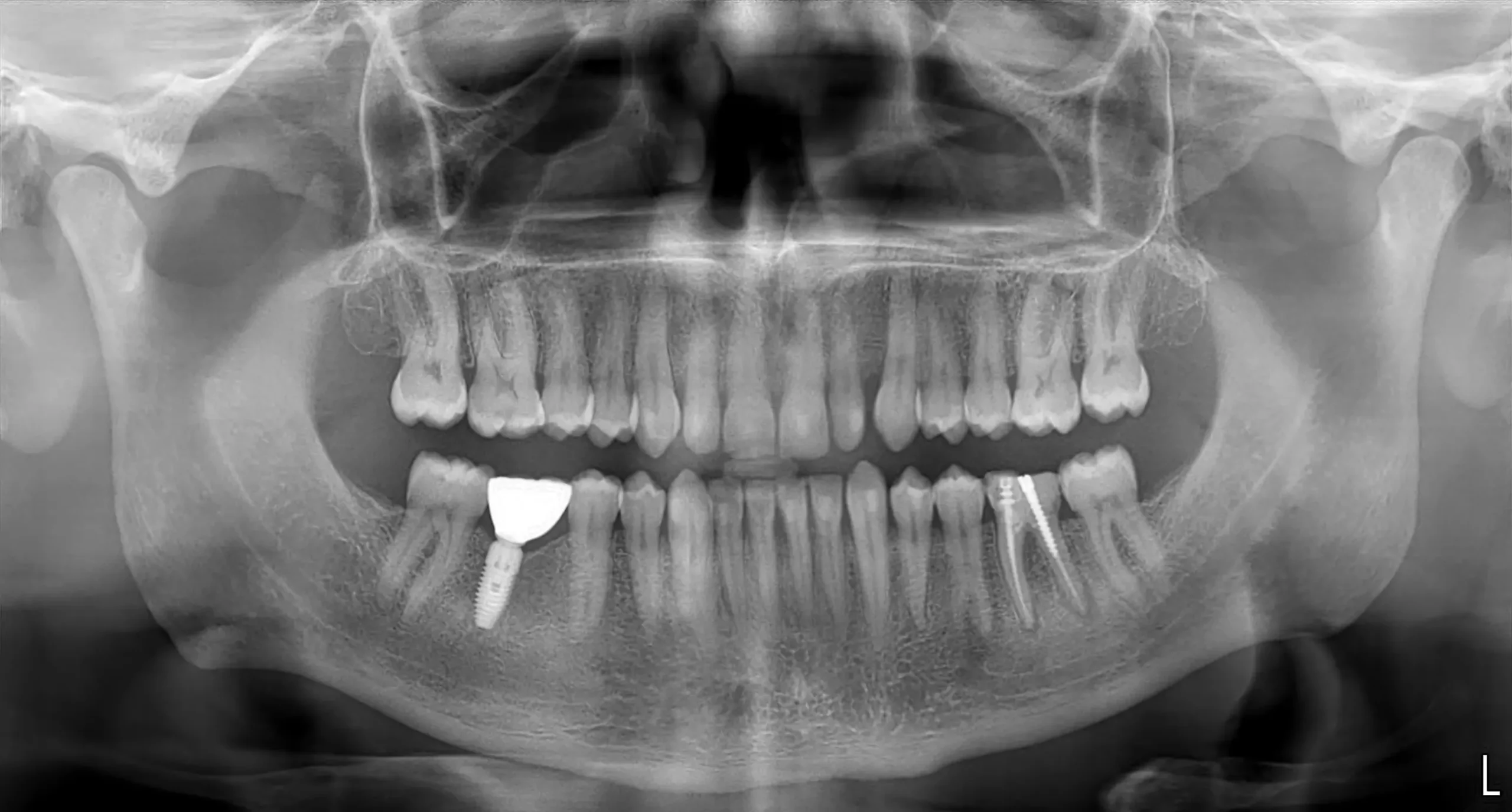
Why was the X-ray evaluation performed?
Although lamina veneers seem to be an aesthetic treatment, the general health status of the teeth should be evaluated before starting the treatment. For this reason, our patient's panoramic x-ray was examined.
In the X-ray evaluation, tooth roots, existing restorations, bone support, general structure in the mouth and conditions that may affect the lamina planning were checked. Because aesthetic restorations progress more accurately when planned on a healthy oral structure.
In the evaluation for Adem P., the general situation in the mouth was analyzed before proceeding with the lamina veneer process and the treatment plan was created with this information.
How many times did our patient come to the clinic?
Adam P.'s lamina veneering process 4 clinic visits with the patient. Each appointment was scheduled for a different phase of treatment.
In this process, it was aimed for our patient not only to see the final result, but also to be involved in the final result step by step. Thus, the size, form, color and overall smile harmony of the teeth were checked before permanent bonding.
1st Appointment: Tooth Cutting and Digital Impression
At the first appointment, teeth were prepared for lamina veneers and then digital impressions were taken.
Tooth cutting is the preparation stage for the lamina veneers to be placed harmoniously on the tooth surface. In lamina treatment, this preparation is planned according to the patient's tooth structure. The aim is to ensure that the new restorations fit harmoniously with the teeth and to achieve a natural transition in the final appearance.
In the digital impression phase, three-dimensional recordings of the teeth were taken with the help of an intraoral scanner. These records were used to design the lamina veneers in the laboratory process.
At this appointment, the patient's lip line, the amount of teeth visible during the smile and the bite relationship of the teeth were also included in the treatment plan.
2nd Appointment: Plastic / PMMA Proofing
Second date PMMA proofing performed. This is an important check before the final laminates are permanently prepared, where the patient can see the new smile design in the mouth.
During the PMMA fitting, draft teeth made of plastic material are evaluated in the mouth. These teeth are not the final restorations, but give the patient an idea of the new tooth dimensions, overall form, smile line and relationship with the lips.
At this stage, answers are sought especially to the following questions:
- Do the teeth look appropriate for the patient's face?
- Do your front teeth look natural?
- Is the smile line compatible with the lip structure?
- Are teeth perceived as too long, short, wide or small?
- Is the design that the patient sees in the mirror close to their expectations?
PMMA proofing allows modifications to be made to the design before proceeding to permanent restorations. It is therefore an important intermediate control, especially in multi-laminate veneering treatments.
Appointment 3: Dentin Proofing
On the third date dentin proofing made. At this stage, it is no longer a plastic draft, but an unpolished and unfinished version of the actual lamina veneers to be applied to the patient.
Dentin rehearsal is one of the most sensitive stages of treatment. Because at this stage, an evaluation very close to the final appearance is made. The color, form, edge transitions, harmony with the lip, relationship with the gum and bite comfort of the teeth are checked.
The patient's opinion is particularly important at this appointment. Because before the lamina veneers are permanently bonded, the shade, the general perception of the teeth and the effect of the smile on the patient are evaluated together.
During the dentin rehearsal, the following details are taken into consideration:
- Is the color choice compatible with the patient's expectations?
- Does the surface form of the teeth look natural?
- Is the symmetry of the front teeth adequate?
- Is the lip movement in harmony with the teeth?
- Any discomfort in closing?
- Does the patient feel ready for the final outcome?
If necessary, minor adjustments can be made at this stage. This way, the final result is more controlled before the final appointment.
4th Appointment: Finishing and Permanent Bonding
At the fourth appointment, the finishing phase began. At this stage, the final controls of the lamina veneers were performed. Color, form, lip harmony, closure relationship and patient satisfaction were re-evaluated.
If everything has gone according to plan and the patient is happy with their new smile, the lamina veneers are permanently bonded.
The final appointment is not only the stage where the treatment is completed. It is also the final approval stage of the measurements, proofs, color evaluation and form checks made throughout the treatment.
After all controls were completed for Adem P., the lamina veneers were permanently bonded and the treatment process was completed.
Why 20 Lamina Veneers Planned?
The reason for planning 20 lamina veneers was that the upper and lower teeth appeared together in our patient's smile and the aesthetic integrity could not be achieved with only a few teeth.
The teeth visible during the smile should be compatible with each other in terms of color, size and form. If only the front few teeth are treated, there may be a difference in color or form between the treated teeth and the natural teeth.
Therefore, 20 lamina veneers were planned for Adem P. to achieve a more balanced and integrated result. Thanks to this planning, a more harmonious appearance was aimed both in the upper and lower smile line.
What was Considered in Lamina Veneer Planning?
The most important point in this process was not only to make our patient's teeth look whiter, but also to harmonize her smile with her facial structure.
The following details were considered together during the planning process:
- Size proportions of front teeth
- Relationship of teeth to lips
- The amount of teeth visible during a smile
- View of upper and lower teeth together
- Form transitions between teeth
- Natural perception of color choice
- Harmony with the gum line
- Closing relationship
- How the design looks on the patient during PMMA rehearsal
- Color and form matching of actual restorations during dentin proving
Thanks to these details, the treatment progressed not only as a technical restoration procedure, but also as a smile planning tailored to the patient.
What kind of change was achieved as a result of the treatment?
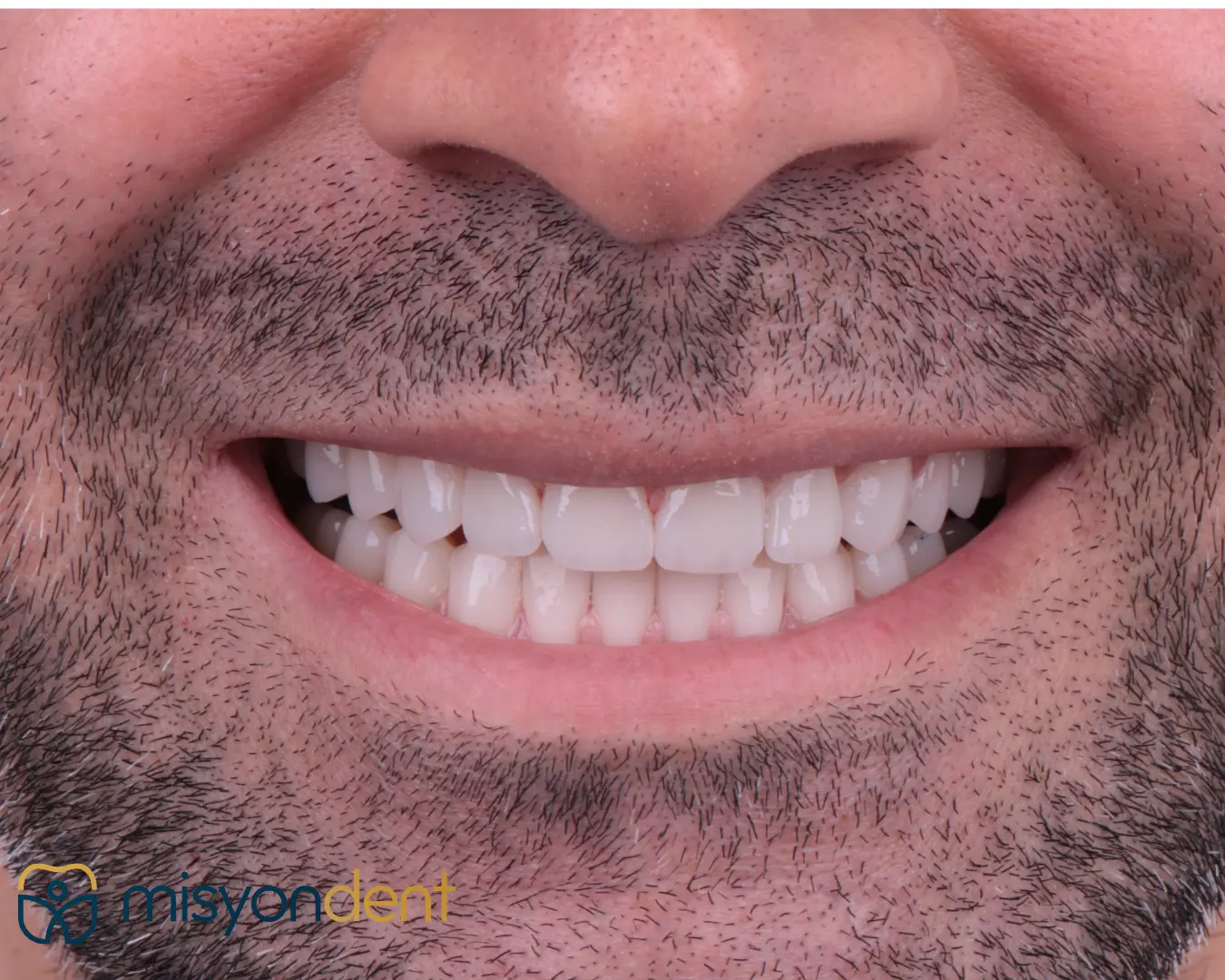
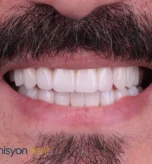
When the treatment was completed, our patient's smile looked more organized, brighter and more complete. Teeth that initially appeared more irregular in form and color were made more harmonious with lamina veneers.
In the final photo, it is seen that the teeth have a more balanced relationship with the lip line, the front tooth forms have become more regular and the smile has gained a cleaner and more aesthetic expression in general.
In this process, the aim was to make our patient's smile more harmonious without changing her facial expression. As a result, a more natural, more organized and more aesthetic smile appearance was obtained.
For whom can this treatment process be instructive?
This process prepared for Adem P. can be a guide for patients who are not satisfied with their smile aesthetics despite the absence of major health problems in their teeth.
Especially in these cases, lamina coating can be considered as an option:
- If there is a form irregularity in the front teeth
- If there is a color mismatch between the teeth
- Small abrasions on the edges of the teeth
- If you want to make the smile line more balanced
- If the length or width of the teeth is to be aesthetically re-planned
- If the patient wants a more natural but more organized smile
However, lamina veneers may not be suitable for every patient. Factors such as clenching habits, enamel structure, bite relationship, presence of caries and gum health must be evaluated.
Frequently Asked Questions
How many appointments does the lamina veneer treatment take?
The number of appointments may vary depending on the patient's intraoral condition, the number of laminae to be made and the rehearsal stages. The treatment for Adem P. was completed in 4 clinic visits. During these visits, tooth cutting and digital impression, PMMA proofing, dentin proofing and finishing stages were performed respectively.
Why is 20% lamina veneer applied?
20 lamina veneers can usually be planned in cases where both upper and lower teeth appear together in the smile. The aim is not only to replace the front few teeth, but to provide color and form integrity in the smile. This number may vary according to the patient's tooth visibility, lip line and aesthetic expectations.
Is a tooth cut for lamina veneers?
Yes, most lamina veneers require a certain amount of preparation of the tooth surface. The amount of this preparation depends on the patient's existing tooth form, enamel structure and the planned result. The aim is to ensure that the lamina veneers fit harmoniously on the tooth.
Why is digital impression important in lamina treatment?
Digital impressions allow teeth to be recorded in three dimensions. In this way, the form, borders and bite relationship of the lamina veneers can be planned in a more controlled way in the digital environment. It also contributes to a more organized laboratory process.
What does the patient see with PMMA rehearsal?
The PMMA fitting shows the patient a draft of the final smile design. At this stage, the length and width of the teeth, their relationship with the lips and the overall smile line are evaluated. The patient gets an idea of how their new smile will look before the permanent laminates are applied.
Why is the dentin rehearsal done before the final?
The dentin fitting is the testing of the actual lamina veneers in the mouth in their unpolished state. At this stage, color, form, symmetry, gum harmony and bite are checked. The patient and the dentist make the final evaluation before permanent bonding.
Can the patient decide the color of the lamina veneers?
The choice of color is evaluated by the patient and the physician together. The patient's expectations are important; however, the chosen color should be compatible with the skin tone, lip structure, natural tooth appearance and facial expression. Instead of a very white but artificial color, a color that suits the person should be planned.
Does lamina veneer look natural?
When planned correctly, lamina veneers can provide a natural look. Naturalness is not only about color, but also about the form of the teeth, surface character, light transmittance, harmony with the lips and position in the smile line.
Can lamina veneers be applied if the teeth are not too crooked?
In mild form irregularities or minor alignment problems, lamina veneers can be considered as an aesthetic option. However, orthodontic treatment may be required for severe crowding. This distinction should be made after examination and x-ray evaluation.
Is X-ray taken before lamina veneers?
Yes, it is important to have an X-ray evaluation before comprehensive aesthetic treatments. Tooth roots, bone support, existing restorations and possible treatment needs are checked in this evaluation. Thus, aesthetic planning is done on a healthier basis.
Are the laminates glued immediately at the finishing appointment?
At the finishing appointment, final checks are made first. After evaluating the color, form, closure and patient satisfaction, the lamina veneers are permanently bonded if everything is suitable. If there is a detail that the patient is not comfortable with, it should be evaluated before permanent bonding.
Is lamina veneer suitable for everyone?
No. For lamina veneers, the existing enamel structure of the teeth, bite relationship, clenching habits, oral hygiene and gum health should be evaluated. While lamina is appropriate for some patients, zirconium, e-max, orthodontics or other treatments may be more appropriate for others.
Will this result be the same for everyone?
No, no. Each patient's tooth structure, lip line, smile character, color expectation and intraoral condition are different. Therefore, the treatment plan, the number of appointments and the result may vary from person to person. This content shows the personalized treatment process prepared for Adem P.
Short Treatment Summary
Patient: Adem P.
Start date 21.07.2025
End date: 28.07.2025
Total clinic visits: 4
Reason for application: The expectation that the teeth look more regular, more aesthetic and more harmonious during the smile
Evaluation: Intraoral examination, photo analysis and panoramic x-ray examination
Treatment applied: 20% lamina veneer
1st date: Tooth cutting and digital impression
2nd date: Plastic / PMMA proofing
3rd date: Dentin rehearsal
4th date: Finishing and permanent bonding
Treatment approach: A more balanced smile was planned with 20 lamina veneers by evaluating the color, form, relationship with the lip and smile line of the teeth together.
Conclusion: A more organized, brighter, more aesthetic and harmonious smile appearance was obtained.
Suitable Information Note for End of Page
This treatment process is planned specifically for the oral and dental structure of our patient. Each patient's treatment needs, the number of procedures to be performed, the number of appointments and the result to be obtained may be different. In order to determine the most suitable treatment options for you, a detailed examination and physician evaluation is required.
Images have been shared for informational purposes with the express consent of our patient. Treatment results may vary from person to person. All treatments are planned individually.
This content, Misyondent Oral and Dental Health Clinic specialized dentists in line with current clinical literature and professional experience. It is intended for general information purposes only and does not constitute medical advice. For individual assessment appointment with our specialist physicians is recommended.
Was this content useful?Your feedback helps us improve our content.
Thanks for your feedback!
Would you like to get expert support on the subject?
Share your feedback with us
What would you like to know more about? Your feedback helps us improve our content.
Thank you, WhatsApp is opening!
Your message has been prepared. Confirm on WhatsApp to send.

Dt. Deniz Caliskan
Aesthetic Dentist - Misyondent
Expert authorBorn in 1987, Dt. Deniz Çalışkan completed her dental education at Sofia University. Specializing in aesthetic dentistry, Çalışkan offers customized solutions for each patient in zirconium veneers, smile design and minimally invasive treatments.

 Türkçe
  English